
Mahsoul Shades
Understanding Wind Load Ratings for Shade Structures in the UAE
All guides

Engineering

Understanding Wind Load Ratings for Shade Structures in the UAE

The UAE sees strong seasonal winds and occasional sandstorm-driven gusts, which makes wind load rating one of the most important — and most overlooked — specifications when choosing a shade structure. A wind rating describes the sustained wind speed a structure is engineered to withstand without structural failure, and it directly drives decisions on steel gauge, foundation depth, and anchoring hardware.

How wind load ratings are determined

Engineers calculate wind load based on the structure's height, surface area exposed to wind (larger canopy spans catch more wind), shape (curved or pitched forms often perform better aerodynamically than flat panels), and site exposure — a structure on an open coastal plot or elevated compound faces higher effective wind loads than the same structure in a sheltered courtyard. Foundation depth and anchor bolt specification are sized to match the calculated load, not just the visible frame.

Typical wind ratings by structure type

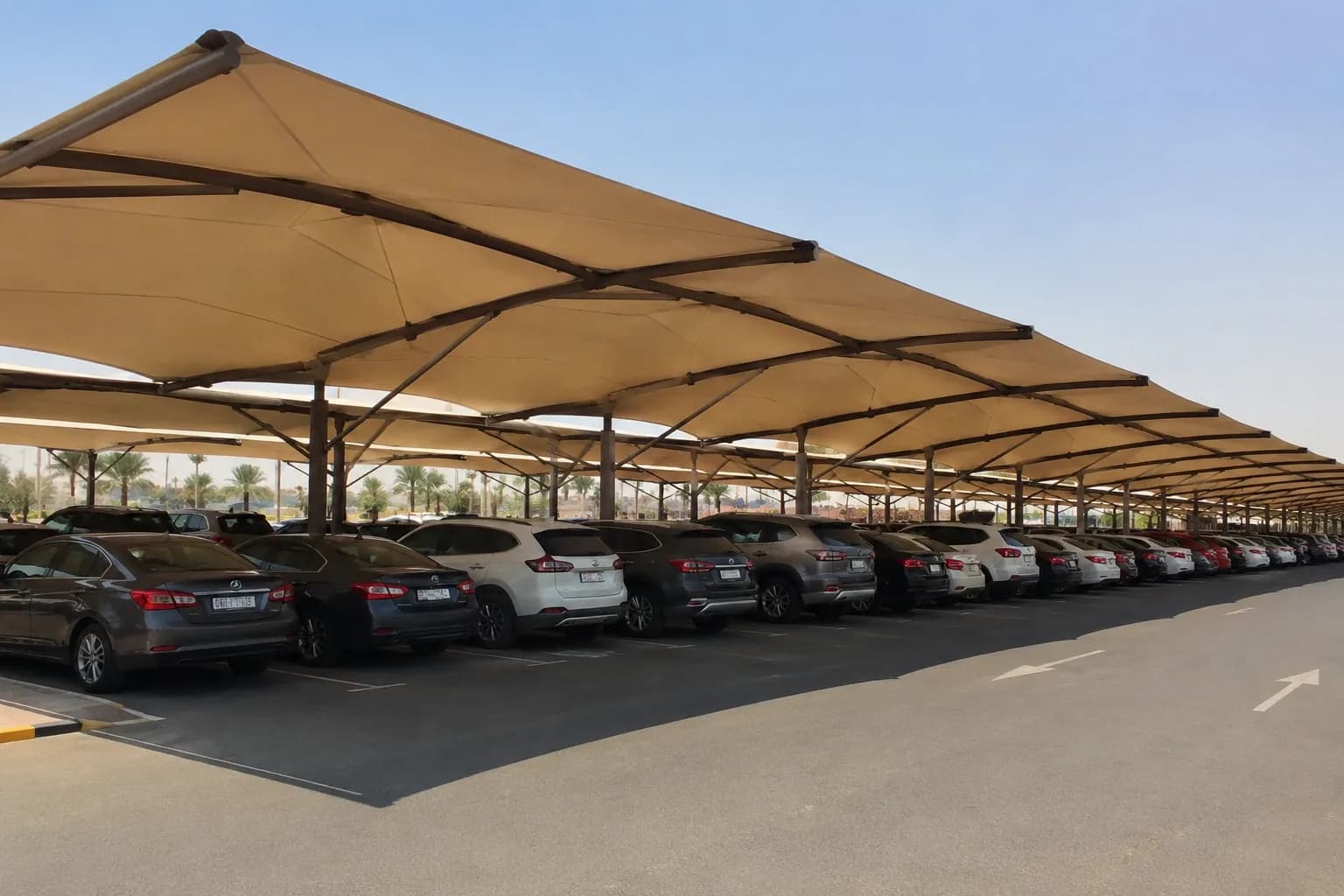
Ratings vary by product and configuration, but as a general guide: cantilever and pyramid arch parking shades are typically rated up to 160 km/hr, residential aluminium pergolas up to 120 km/hr with large commercial layouts up to 150 km/hr, steel pergolas up to 180 km/hr on heavier commercial specifications, and tensile membrane structures typically 150 to 160 km/hr depending on the cable and mast configuration used.

These figures represent standard specifications rather than fixed limits — any of these structure types can be engineered to a higher rating where site conditions call for it, at the cost of heavier steel sections and deeper foundations.

Why the rating matters beyond the spec sheet

An under-rated structure risks fabric tearing, frame deformation, or in worst cases structural failure during a severe wind event — which is both a safety issue and typically not covered by warranty if the structure was installed outside its engineered conditions. Confirming your site's specific exposure with your contractor before finalizing a design, rather than defaulting to the cheapest standard rating, is the single most effective way to avoid costly repairs later.

Frequently Asked Questions

What wind rating do I need for a villa driveway shade?

Standard villa driveway shades are typically specified at 120 to 160 km/hr depending on frame type and site exposure, which covers the vast majority of residential sites. Coastal or elevated plots may warrant a higher rating.

Can an existing shade structure be upgraded to a higher wind rating?

In some cases yes, through reinforced anchoring or additional bracing, but significant rating increases usually require replacing the frame rather than retrofitting the existing structure.

Does a higher wind rating cost significantly more?

It increases cost through heavier steel sections, deeper foundations, and stronger connection hardware, but the increase is usually modest relative to the overall project cost and is far cheaper than repairing storm damage.

Need a tailored recommendation?

Share your site details and the Mahsoul Shades team will recommend the right structure, fabric, and layout for your project.

Request a Quote